



SUBNORDICA – Beyond submerged landscapes
During the last Ice Age, global sea levels were up to 130 meters lower than today, and vast areas of what is now the seabed—including parts of the North and Baltic Seas—were dry land. As a result of post-glacial global warming, wetlands with forests, lakes, and bogs/mires began to spread across these regions starting around 9600 BC. Here, people of the Middle Stone Age lived in mobile communities, subsisting on hunting, gathering, and fishing. They left traces of settlements that were subsequently submerged by rising sea-levels.
While numerous underwater archaeological sites of this period are known in the Baltic Sea, such sites are particularly difficult to locate in the deeper areas of the North Sea, where cultural remains are also expected. They are frequently covered by marine sediments of several meter thickness.
Against this backdrop, the SUBNORDICA project, funded by an "ERC Synergy Grant", investigates these submerged post-glacial landscapes in the North and Baltic Seas. Traces of settlement sites left by Stone Age humans have been preserved there with exceptional good condition. These remains shed light on the development and diversity of the cultures of that era, offering a detailed perspective on how humans adapted to rising sea levels. At the same time, however, these submerged settlement sites and landscapes face an acute threat due to manifold ongoing offshore construction activities.
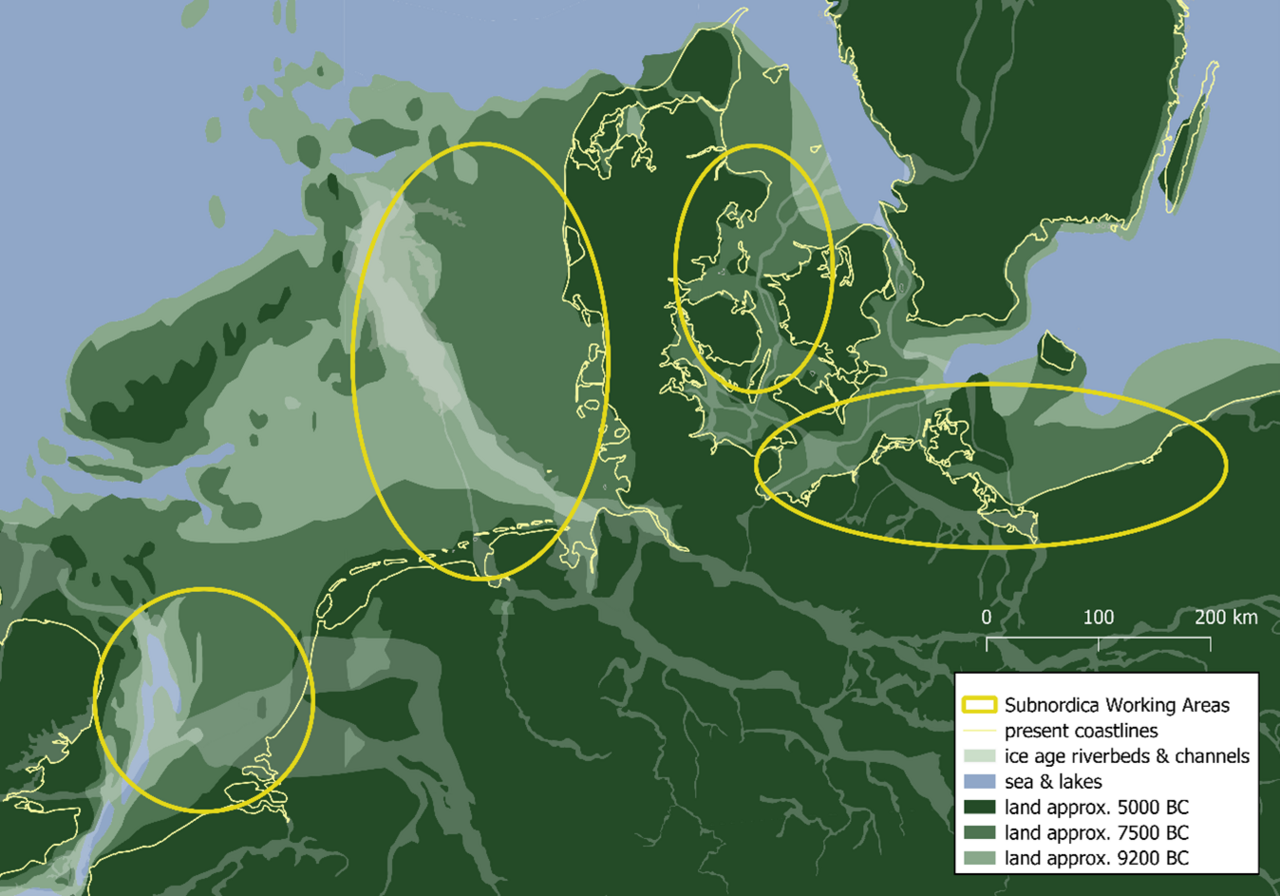
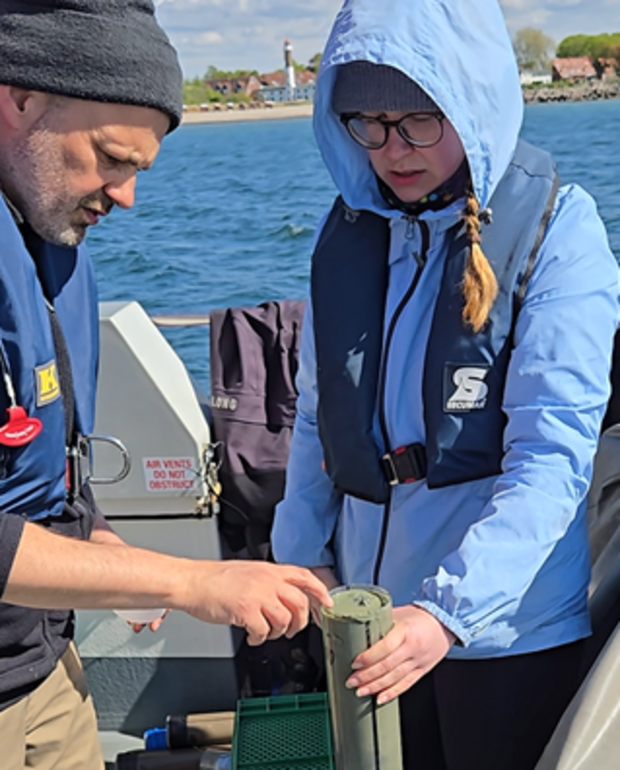
Consequently, new methods for identification and investigation of hard-to-reach archaeological sites in the North Sea based on insights gained from the Baltic Sea are going to be developed in collaboration with NIhK partners of the Universities of Bradford (UK) and Aarhus (DK), the Moesgaard Museum (DK).
In this context, the NIhK contributes its geological expertise regarding offshore expeditions in the North Sea and participates in the reconstruction of the submerged landscapes preserved there.
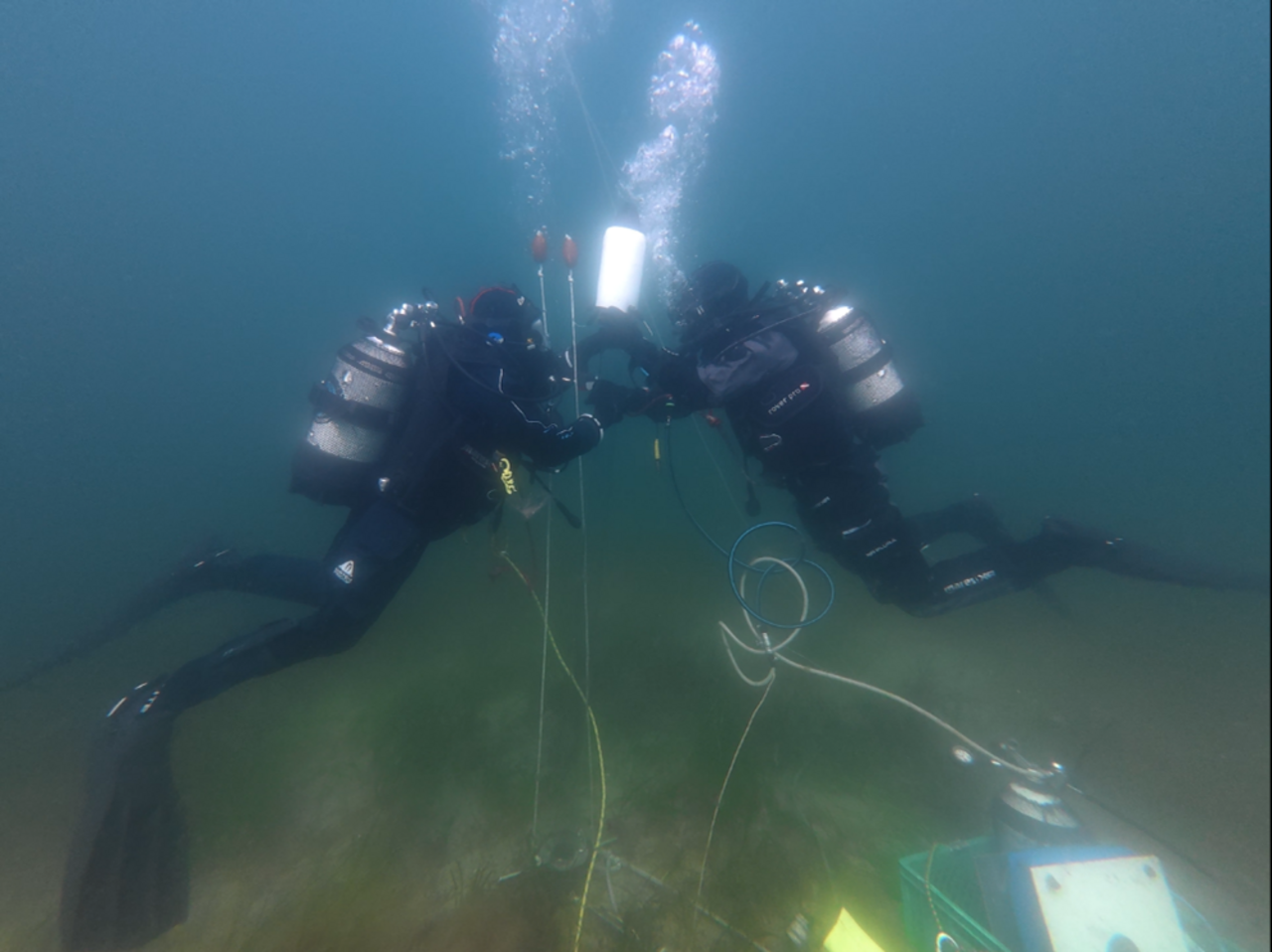
The primary focus of the SUBNORDICA work at the NIhK lies specifically on the submerged forests and settlement sites in the southern Baltic Sea and its surrounding region. The team led by PI Dr. Svea Mahlstedt is dedicating its efforts to these sites, working in conjunction with cooperation partners at the Leibniz Institute for Baltic Sea Research Warnemünde, as well as partner institutions at the Universities of Rostock and Szczecin and the state archaeological offices of Mecklenburg-Western Pomerania and Schleswig-Holstein. Fieldwork has been conducted in Wismar Bay since spring 2025, where more than 20 Stone Age sites have been identified already in the frame of the SINCOS Project, that are now re-investigated. In this region, the coastline at the time shifted several kilometers inland between the 7th and 4th millennia BC due to Holocene sea-level rise. Archaeological investigations from the early 2000s document a change in subsistence strategies. The spatial distribution and composition of the finds suggest that mobile Stone Age groups deliberately used different locations for specific activities.
In addition to Wismar Bay, current investigations are focusing on submerged forest landscapes off the Darß-Zingst peninsula. Furthermore, an expedition aboard the research vessel 'Elisabeth Mann Borghese' is scheduled for late autumn 2026 to explore deeper areas of the Baltic Sea, where well-preserved landscape surfaces are also to be sampled sedimentologically. Other focus areas are along the Polish Baltic coast and in the region of the Szczecin Lagoon. There, archaeological chance finds—as well as submerged forest and lowland areas—point to so far unknown Stone Age settlement sites.
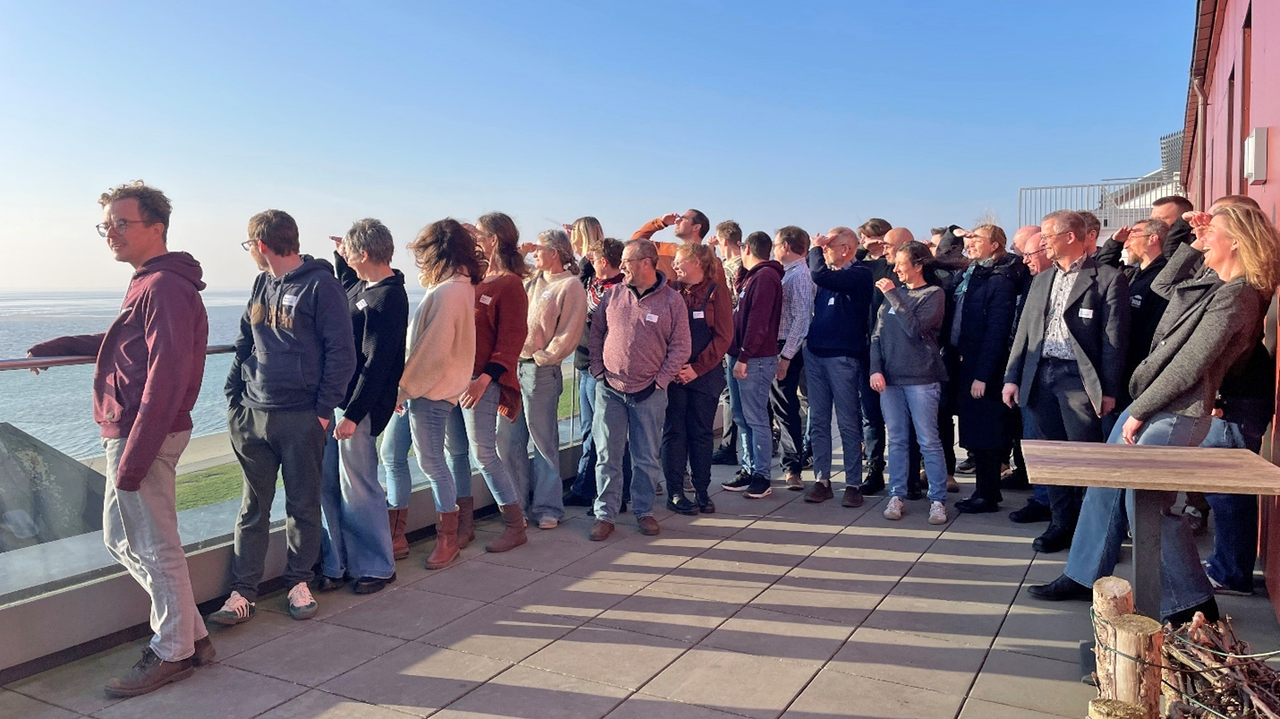
Together with Dr. Svea Mahlstedt, Prof. Dr. Felix Bittmann, Dr. Daniel Hepp, Dr. Moritz Mennenga, Dr. Friederike Bungenstock and Dr. Martina Karle from NIhK are contributing to SUBNORDICA.
References
- Özmaral A, Abegunrin A, Keil H, Hepp DA, Schwenk T, Lantzsch H, Mörz T, Spiess V (2022) The Elbe Palaeovalley: Evolution from an ice-marginal valley to a sedimentary trap (SE North Sea). Quaternary Science Reviews 282: 107453. https://doi.org/10.1016/j.quascirev.2022.107453
- Jöns H, Lüth F, Mahlstedt S, Goldhammer J, Hartz S, Kühn H-J. 2020. Germany: Submerged sites in the south-western Baltic Sea and the Wadden Sea. In: Bailey G, Galanidou N, Peeters H, Jöns H, Mennenga M (eds) The archaeology of Europe’s drowned landscapes. Springer, Cham, pp. 95–123. https://doi.org/10.1007/978-3-030-37367-2_5