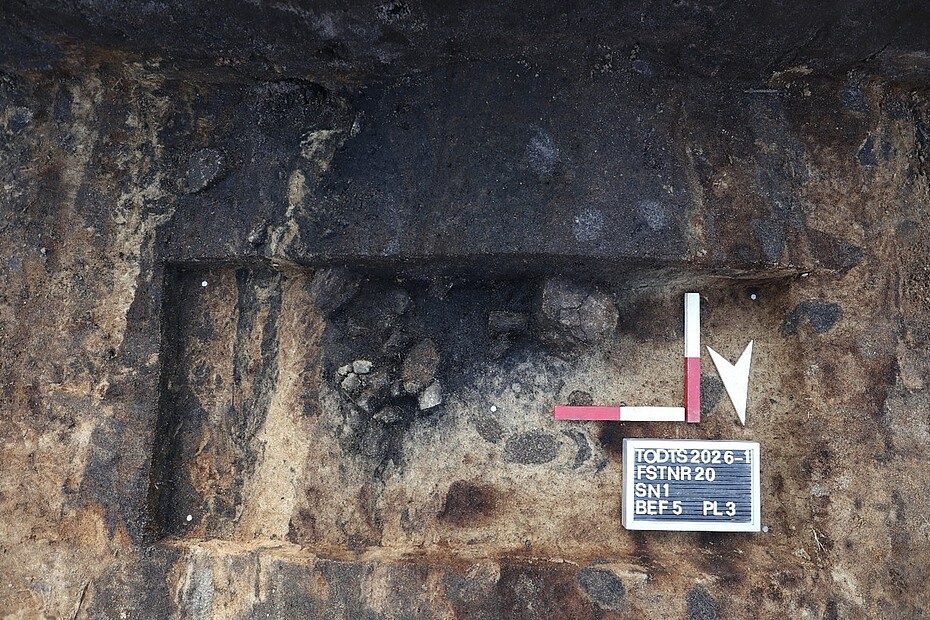
Excavation of Mesolithic Hearths at the edge of the wetlands
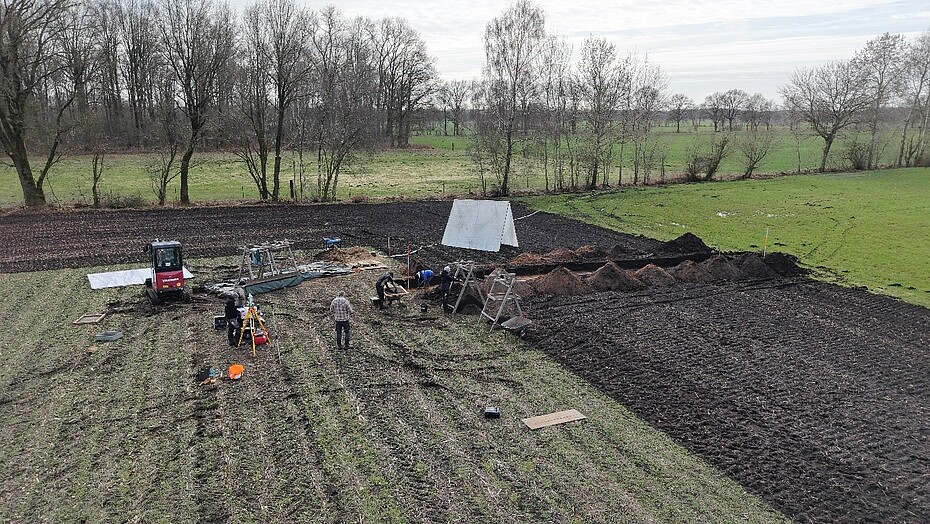
Between March 16 and March 27, 2026, excavations took place at the Upper Wümme Valley near Groß Todtshorn in Northern Germany. They are part of the project "The Mesolithic in Northwest Germany". Led by Dr. Svea Mahlstedt and Jeffrey König, the team investigated a site located on the sandy edge of the shallow valley. The site had been identified through surveys by amateur archaeologists. Thanks to GPS data they had collected on individual flint artifacts, the archaeologists were able to precisely locate the excavation. It extended across parts of the central site as well as areas in the wetlands. The aim was to connect these two natural environments in order to clarify the reasons for the millennia-long presence of Mesolithic hunter-gatherer groups in the valley.
During the excavation the scientists discovered a number of Mesolithic stone tools as well as two hearth pits. These will now likely allow for precise dating of the site using radiocarbon (14C) analysis of the recovered charcoal. The hearths are located just a few meters from the edge of the lowland area, where peat had already formed immediately after the last Ice Age. This situation indicates that Mesolithic people deliberately chose a place in proximity to the damp lowland.
The finds from this site are currently being investigated by Jeffrey König so that they can subsequently be compared with other sites. The team also expects the composition of the various tools to provide new insights into the use of the area during the Stone Age.