Exceptional grave goods ensemble from Nienbüttel investigated at LEIZA
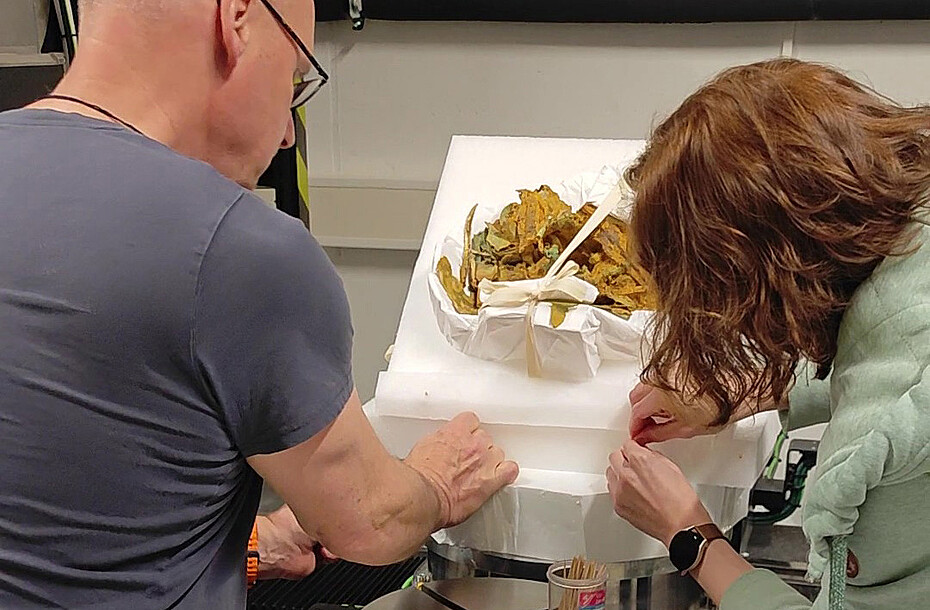
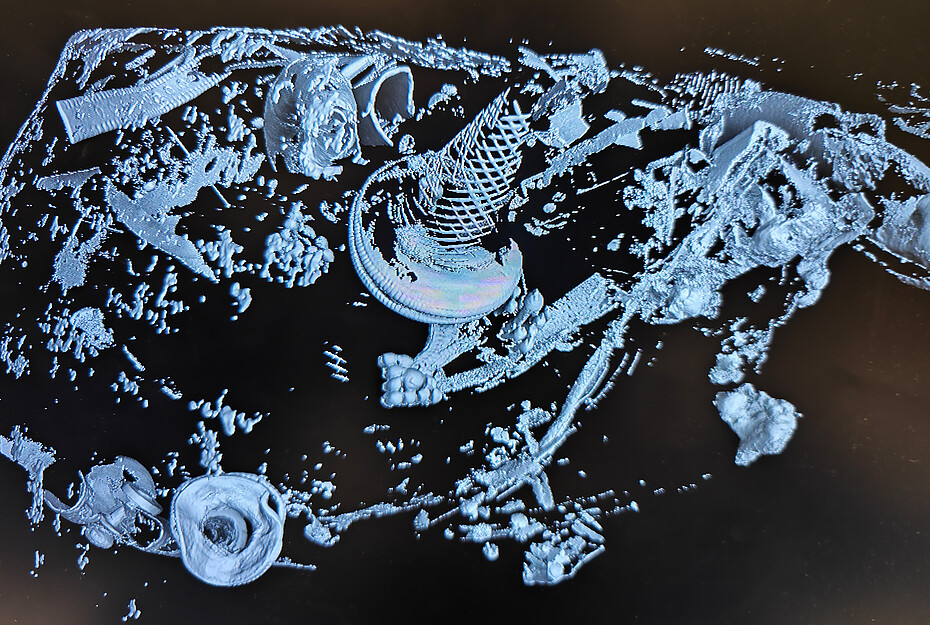
The two bronze vessels discovered within a complex stone setting at Nienbüttel represent an extraordinary archaeological find. The excavation and documentation of the vessels were initially carried out at the NIhK in Wilhelmshaven and later continued in Stuttgart by students of the programme ›Conservation and Restoration of Archaeological, Ethnological and Arts and Crafts Objects‹ at the Academy of Fine Arts (ABK). One of the vessels contained cremated human remains, while the second vessel of the same type held the grave goods. Already during excavation, it became evident that the assemblage was exceptionally rich: among the clearly identifiable objects were a folded sword with a silver pommel, a spearhead, various fittings, and U-shaped shears. At the same time, it also became apparent that additional artefacts were concealed within the heavily corroded conglomerate. For this reason, the assemblage was transferred to LEIZA in Mainz, where a state-of-the-art high-performance computed tomography scanner enables the non-destructive visualisation of otherwise inaccessible structures and objects. The scans were conducted by Dr. Jana Kunze. Even the first images revealed the true extent of the assemblage and further highlighted its outstanding quality and archaeological significance. Particularly striking are the silver-inlaid riding spurs and the numerous sheet-metal fittings, some of them decorated, which point to the elevated social status of the buried individual. The image data are currently being analysed at LEIZA, and the objects are being virtually reconstructed. Even at this stage, however, it can already be stated that the CT scans have made an important contribution to the socio-archaeological interpretation of this exceptional burial.