
The Sceatta Hoard from Hesel – prepared for the Redbad exhibition
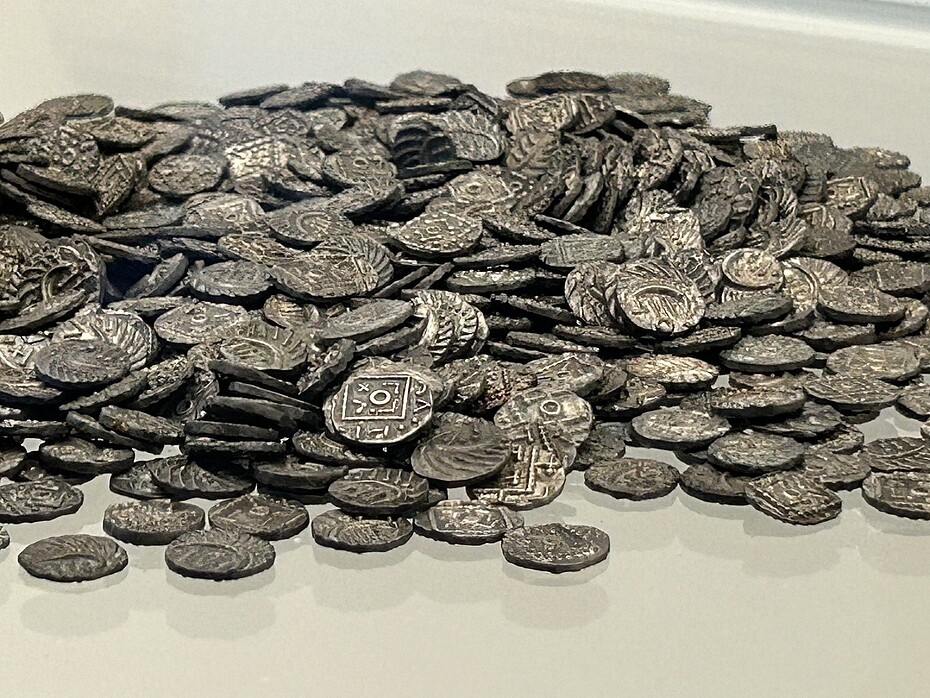
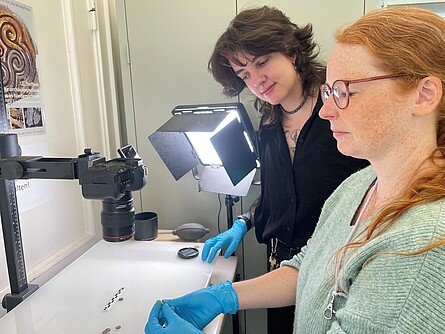
The Redbad exhibition, which will be on display at the Fries Museum in Leeuwarden from September 2026, aims to give visitors an insight into the lives of the people who lived in the so-called Frisian coastal regions between the 5th and 9th centuries. To this end, numerous artefacts recovered during excavations by the NIhK and/or forming part of the highlights of the permanent exhibition at the East Frisian State Museum in Emden (OIME) will also be on display. The priority at present is therefore to document the current condition of all the objects to be displayed at the Fries Museum, to carry out any final restoration work where necessary, and then to pack the exhibits in such a way that they can be transported without any problems. The NIhK and the OLME are working closely together on this. One particular challenge is posed by a hoard of coins discovered as early as 1838 in the Heseler Wald area in the district of Leer, specifically near the abandoned Barthe monastery. It originally consisted of more than 800 so-called sceattas, of which 729 specimens are still preserved today. These are small silver coins which were minted primarily between the second half of the 7th century and the mid-8th century, for example at Dorestad in the Rhine estuary or at Ribe on the west coast of Denmark, and which thus mark the beginning of the monetary system in the early Middle Ages. They were accepted as a means of payment, particularly in trading centres throughout the North Sea coastal region. On 25 July, the coins were taken by P. Molina and C. Peek to the NIhK’s restoration workshop. There, S. Faupel carried out a detailed photographic documentation and then packed the Sceattas into special transport cases to ensure they would survive the journey to the Fries Museum unscathed.
