
New Insights of the Dolmen at Wanna, District Cuxhaven
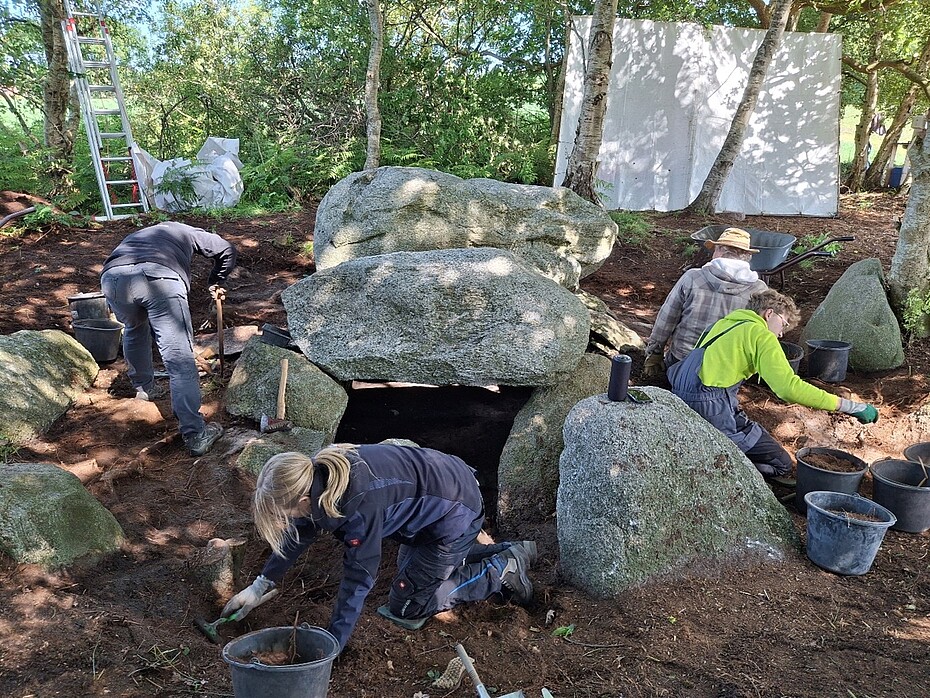
From June 8th to 19th 2026, a small excavation was conducted at the Neolithic tomb of Wanna, FStNr. 1229 located in the district of Cuxhaven. This work was carried out within the framework of the project "Between the Rivers and Against the Tide?,", lead by Dr. Moritz Mennenga, and which is financed by Zukunft.Niedersachsen. Previous work within the project has documented an intensive building phase of megalithic tombs after 3400 BC within the Elbe-Weser Triangle, with pottery indicating continued use of the tombs over several centuries. However, the tomb under investigation herein represents an extended dolmen and thus constitutes one of the oldest megalithic tombs in the region. Currently, limited information exists regarding the construction methods of these monuments, and a precise chronological attribution remains lacking. The type represents a culturally significant transition from individual to collective burial traditions and thus constitutes a pivotal moment in the burial practices of the Funnel Beaker Culture around 3500 BC. Given the scarcity of evidence from this chronological horizon in the region, the excavation at the dolmen in Wanna assumes considerable importance for research, as it provides the opportunity to investigate important research questions concerning age, usage, and traditions.
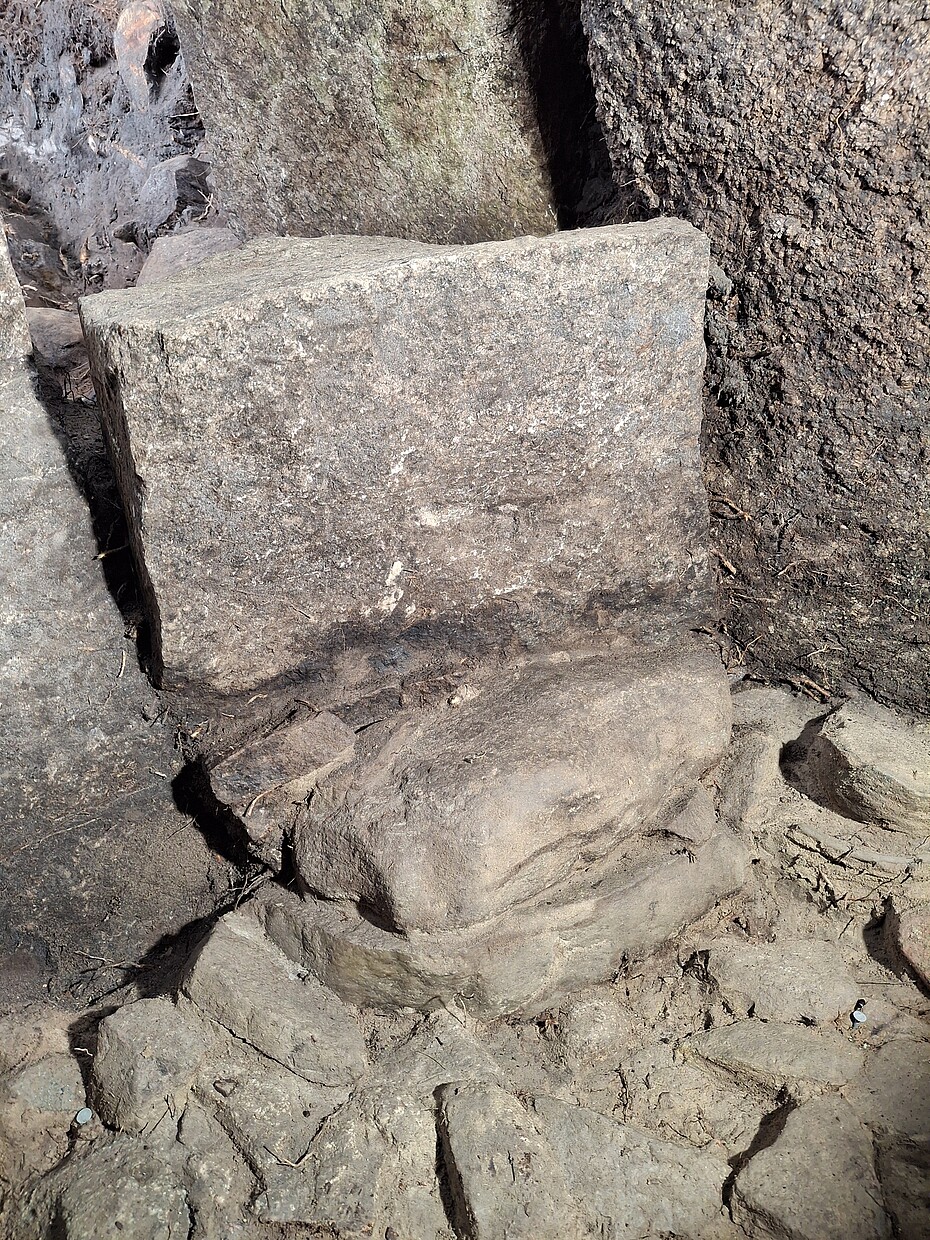
The excavation revealed that several stones of the surrounding stone circle were missing or displaced. Additional disturbances were also observed in the entrance area and between two circle stones. Particularly the entrance area was characterized by strongly mixed stratigraphic layers, preserving only a few locations where the former Neolithic ground surface remained intact. Several sherds were recovered in this area, suggesting repeated use of the burial chamber. This was confirmed by the exposure of a small cornerstone marking an entrance on the western side. Notably, a staircase construction leading into the approximately 1.3-meter-high burial chamber was also discovered. Thus, the extended dolmen at Wanna possessed an entrance previously known only from tombs with collective burials. The sampled and recovered materials from the excavation are currently being analyzed and are expected to yield new insights into the usage history.
Current updates on the project can be found on the blog "Relikte im Moor."