
Mesolithic Flint Tools in Focus of research
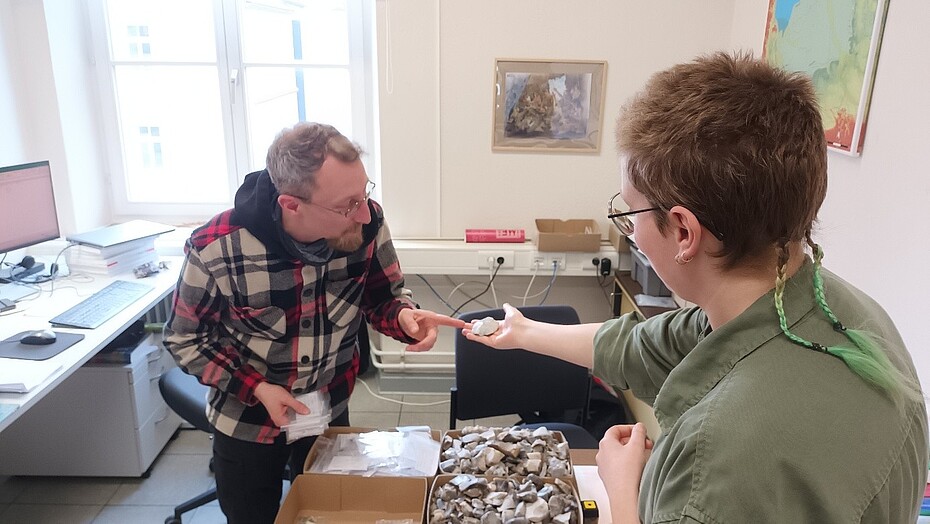
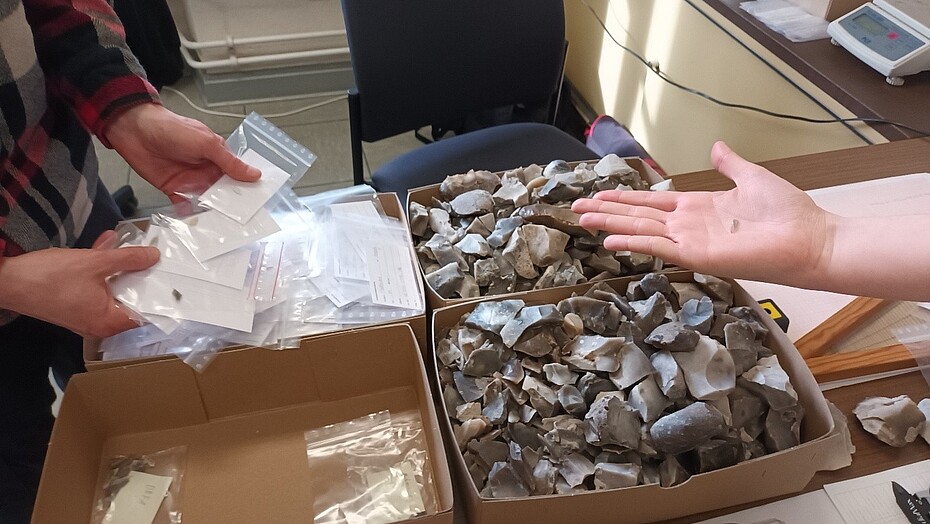
Kimberly Wordtmann and Jeffrey König are currently compiling a database of over 20,000 stone artifacts from a site in the Upper Wümme Valley as part of the project "The Mesolithic in Northwest Germany," led by Svea Mahlstedt. The Stone Age tools and tool debris were collected from the surface of the site by amateur archaeologists over the past few decades and forwarded to the Archaeological Museum Hamburg.
The objects mostly date to the Mesolithic period between 9600 and 3600 BC. Tool types such as microliths (micro = small, lithos = stone) were particularly common during that time. These are small, worked flint blades that served as arrowheads. The shape of microliths changed during the Mesolithic period, so the occurrence of different forms in specific compositions provides clues to the age of the respective site. Furthermore, the inventory of these sites reveals how people in the Mesolithic period used flint as a raw material. This includes not only the techniques used to produce specific objects but also the value attributed to the material.