Westgermania in Transition – Publication and multidisciplinary research into the cultural landscape of north-western Germany during the Roman Imperial period
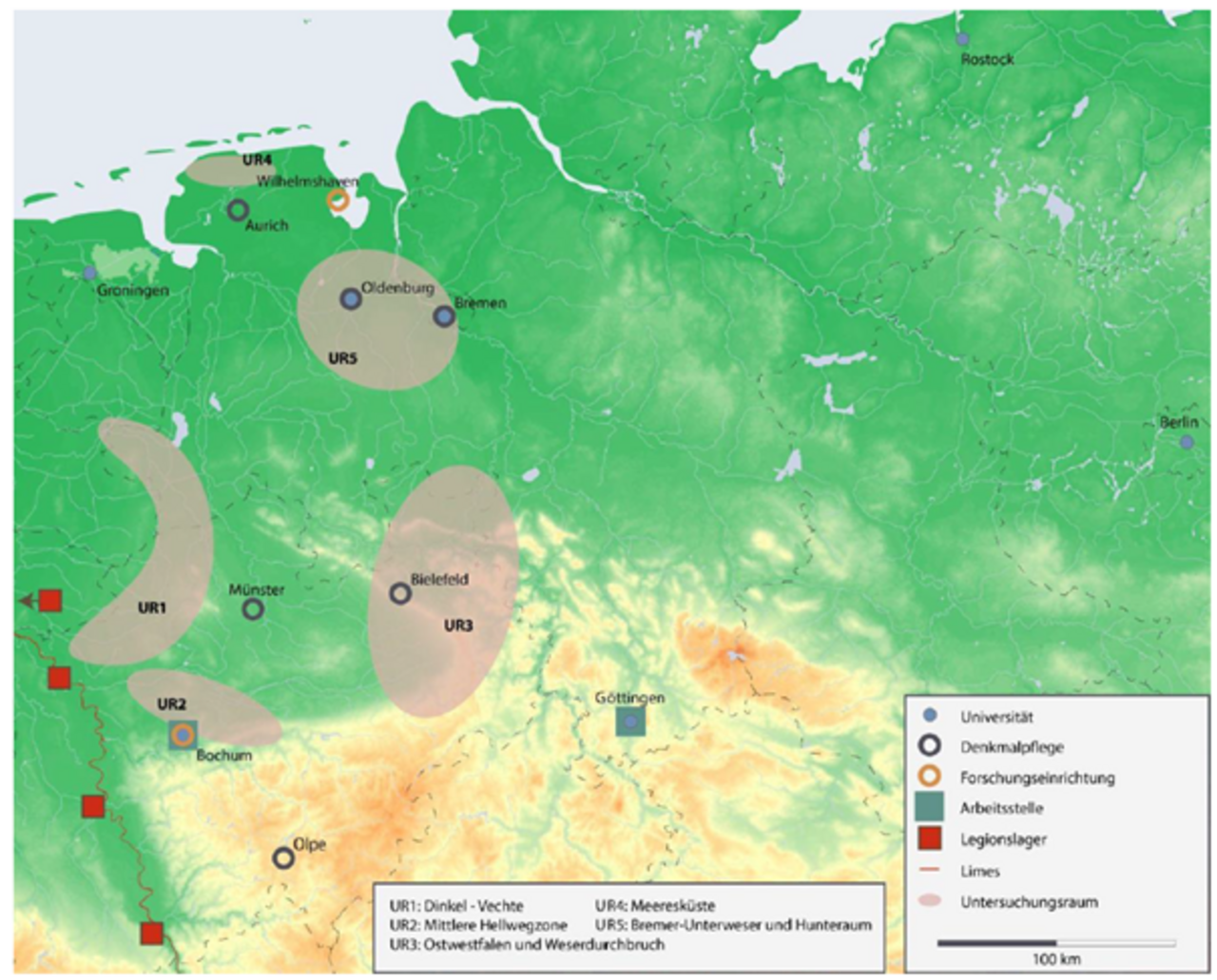
The history of Roman iron age settlement in the regions of north-western Germany situated between the Rhine, the Weser and the North Sea is the focus of the above-mentioned project, which has been approved for funding by the Union of German Academies of Sciences and Humanities and is being carried out jointly by the Lower Saxon Academy of Sciences in Göttingen and the North Rhine-Westphalian Academy of Sciences and Arts in Düsseldorf.
This area of study was chosen because it is particularly well-suited to examining the social and economic development of ‘Germanic’ societies which were in close contact with the Roman Empire during the first half of the 1st millennium AD. Our understanding of this period is still shaped by post-war research and contains glaring gaps in our knowledge, even though – particularly since the 1990s – significantly intensified and methodologically expanded archaeological fieldwork ‘behind the Limes’ has documented and recovered countless new findings and artefacts that have so far been scarcely published.
The publication and study of these extensive sources can therefore be regarded as a gap in settlement research, which the ‘Westgermania Project’ aims to address. Accordingly, the project focuses on investigating the nature and extent of cultural interaction with the Roman Empire along the border, as reflected in the changing structures and systems of settlement and the economy.
At the same time, it is also important to describe and investigate the changes in the environmental and living conditions of the communities residing in the study area, and to compile all relevant information for future research using the internet. Extensive sources that have not yet been analysed will be examined using a multidisciplinary approach, drawing on methods from archaeology, archaeobiology, mining archaeology, archaeometallurgy, history and geoinformatics.
The aim is to use this approach to lay new foundations for our understanding of the societies in the West Germanic region, which lived in close proximity to and in mutual exchange with the Roman Empire.
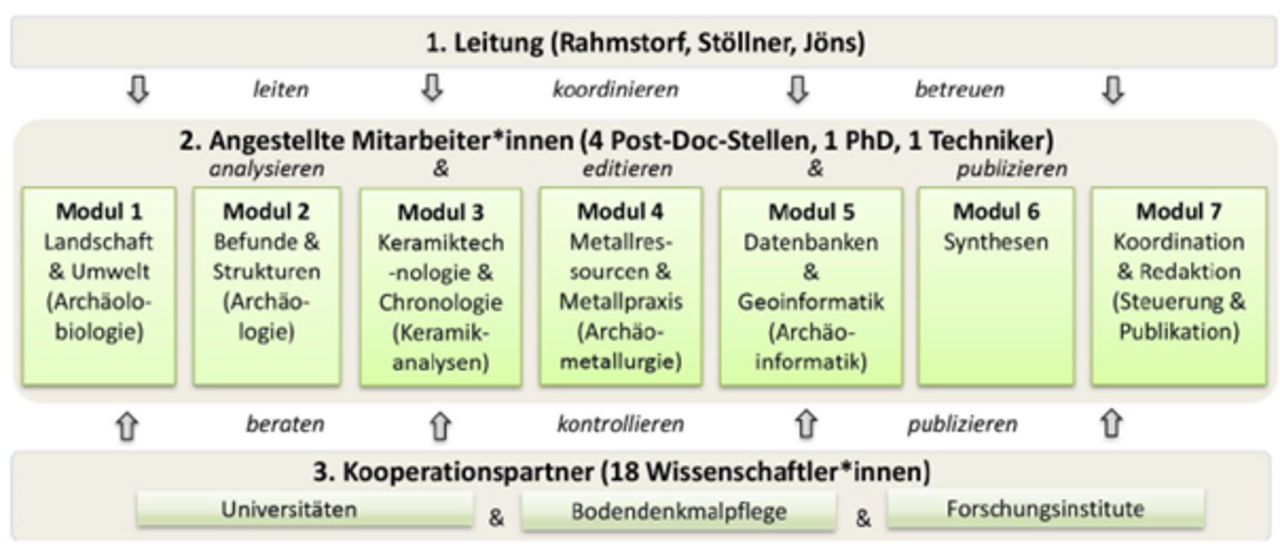
The project was conceived jointly by Lorenz Rahmstorf of the University of Göttingen and Thomas Stöllner of the University of Bochum, in close collaboration with Hauke Jöns of the NIhK in Wilhelmshaven. Other project partners include the Chairs of Prehistory and Early History at the Universities of Rostock, Berlin, Bremen and Groningen, the Chair of Ancient History at the University of Oldenburg, as well as the German Mining Museum (DBM) in Bochum and the Leibniz Centre for Archaeology, Mainz/Schleswig, as non-university research institutions. The project team also includes staff from the Bremen State Archaeological Service, the LWL Archaeology Department for Westphalia, the Lower Saxony State Office for the Preservation of Historical Monuments in Oldenburg, and the Ostfriesische Landschaft in Aurich.
The NIhK is responsible for cataloguing and analysing the extensive collection of ceramic finds. Katrin Struckmeyer and Ivonne Baier have taken on this task. The NIhK also coordinates the archaeobiological investigations. Jonathan Baines has been entrusted with the botanical investigations, whilst the archaeozoological analyses are carried out in collaboration with LEIZA. In addition, the NIhK is involved in the development of the project database through Moritz Mennenga.