
The Bernuthsfeld tunic transferred to the NIhK textile laboratory
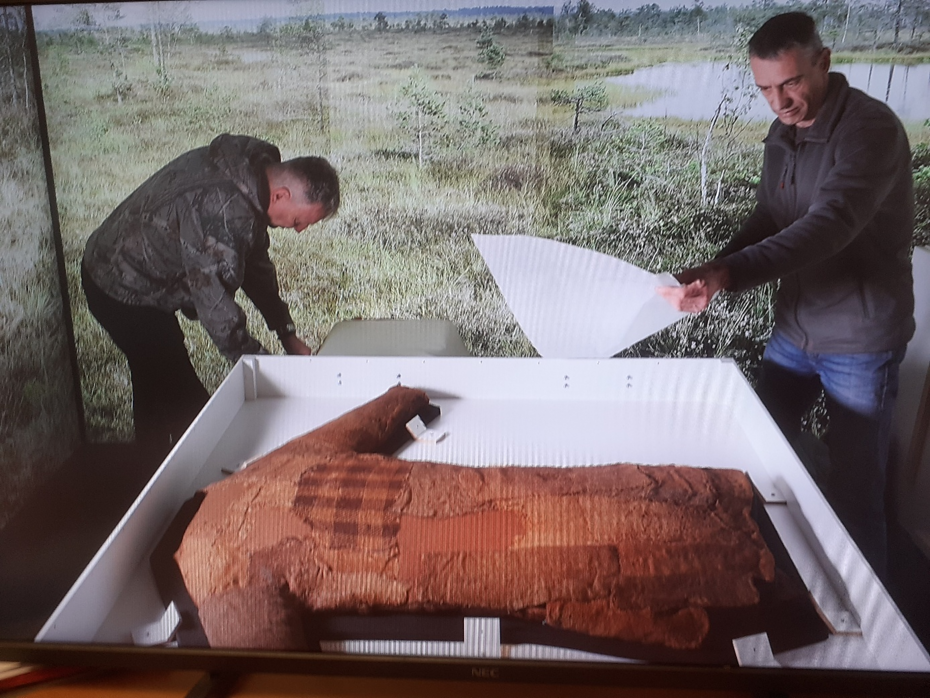

As previously reported, an interdisciplinary research project is dedicated to the detailed study of the completely preserved clothing of the so-called Bernuthsfeld Man, who was buried around 700 AD in the Hogehahn bog near Tannenhausen (now the town of Aurich). After focusing primarily on reconstructing the varied history of the find in recent weeks, the next step is to examine the textiles themselves in detail and document them comprehensively. Among other things, the aim is to determine what qualities of wool were used for the man's clothing, where the wool came from, whether the processed fleeces were dyed, and what steps were involved in the manufacture of the individual garments. As the NIhK not only has the special technical equipment required for the investigations, but also has several proven textile experts on its team, it was decided in close consultation with the Ostfriesisches Landesmuseum Emden and the Gesellschaft für bildende Kunst und vaterländischer Altertümer seit 1820 (1820dieKUNST), to gradually transfer the individual components of the deceased's clothing from Emden to Wilhelmshaven. The tunic, which is known far beyond the borders of northern Germany, was the first to make the move. To ensure its safe journey, fertigten Kai Abrahams and Dirk Dallaserra at the NIhK constructed a sturdy, specially equipped transport crate. So now, it is time to get started...