
The burial ground at Neu Wulmstorf-Elstorf (Harburg district) – investigations into early medieval burial traditions in the Lower Elbe region, with a particular focus on organic artefacts


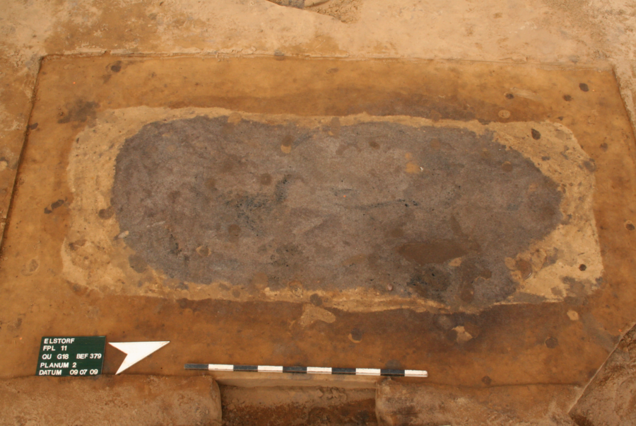
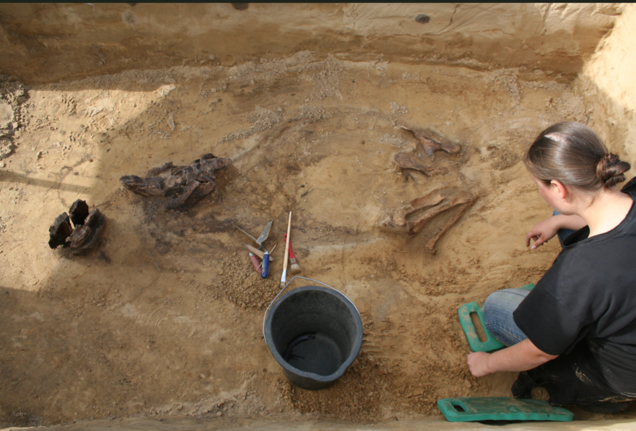
Between 2008 and 2016, the Hamburg Archaeological Museum (AMH) conducted several excavation campaigns and was able to almost completely document the bi-ritual burial ground on the Stade Geest near Neuwulmstorf-Elstorf. In total, around 80 cremation and 500 inhumation graves from the 6th to 10th centuries were discovered in the vicinity of several megalithic tombs, about half of which contained grave goods. Five horse burials were also found.
The burial ground was probably first used for cremation burials without ceramic urns and with posts arranged in a rectangular or circular pattern. A change in burial rites is indicated by the south-north oriented inhumation graves, seven of which were covered with mounds. Three chamber graves were also found. The deceased were mostly laid to rest in treetrunks or coffins with their clothing and tools. The final phase of occupation is characterised by another change in burial rites. Burials laid out in an east-west direction predominate, with the abandonment of the custom of grave goods indicating the spread of Christianity.
The settlement to which the Elstorf burial community belongs is located in the immediate vicinity of the burial ground and the early medieval burial ground of Ketzendorf, which is connected to the burial ground of Elstorf by a path. The settlement as well as the burial ground of Ketzendorf have been archaeologically investigated, thus offering the opportunity to classify the Elstorf burial ground within the immediate cultural landscape.
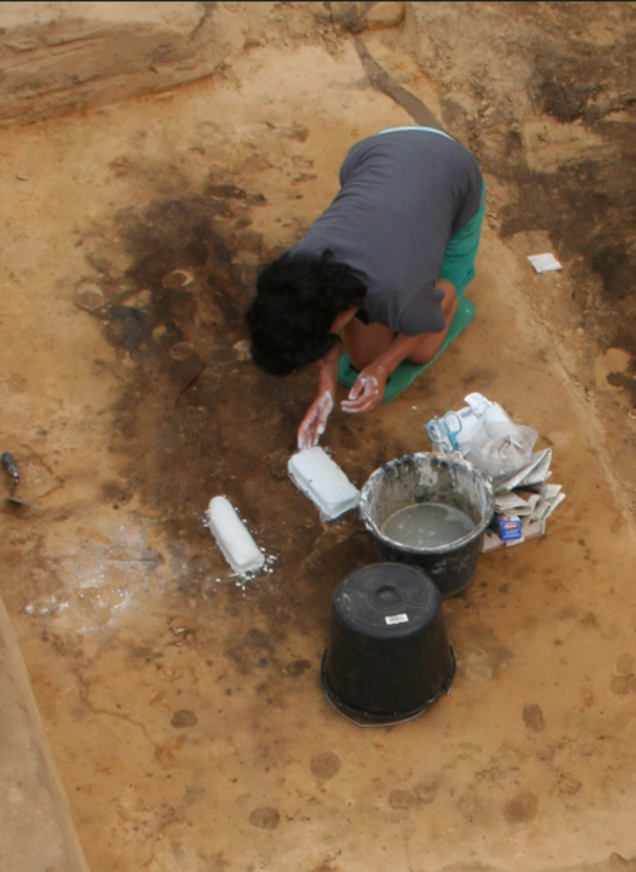
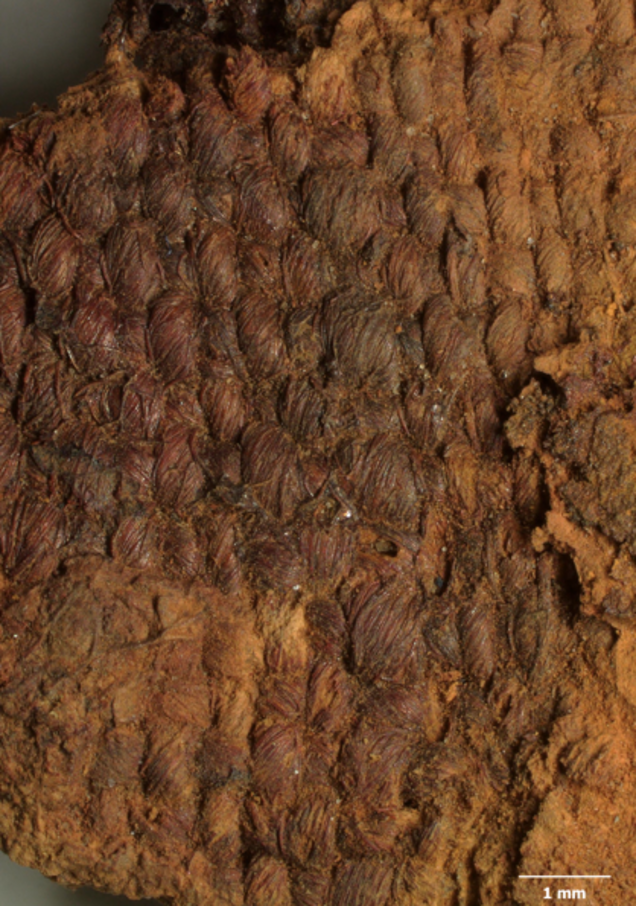
The numerous block lifted inorganic finds enable the organic materials preserved on them, such as textiles, leather, wood and horn, to be examined under laboratory conditions. This provides a unique insight into the role of organic materials in burial rituals.
In a three-year research project funded by the German Research Foundation (DFG), Selina Pohl will record and analyse the findings and discoveries from the burial ground as part of her phd project in order to reconstruct the history of the site and research burial rites and traditions. Special focus will be placed on the organic components of the grave goods, with Selina Pohl being assisted in her work by Christina Peek and Dr. Jochen Brandt (AMH). Further investigations will be carried out by Katrin Struckmeyer (textile archaeology), Ulrich Schmölcke (archaeozoology), Felix Bittmann (archaeobotany) and Swantje Grohmann (anthropology).
Literature
Brandt, J., 2008: J. Brandt, Begraben am Wegesrand. Ausgrabungen auf einem spätsächsischen Gräberfeld bei Neu Wulmstorf-Elstorf. Archäologie in Niedersachsen 2008, 136-140.
Brandt, J., Dörfler, W., Hüser, A., Richter, K., Subbert, J., 2011: Die spätsächsischen Gräber von Buchholz-Vaensen und Neu Wulmstorf-Elstorf – Neue Untersuchungen zum Frühmittelalter im Landkreis Harburg. Hammaburg N. F. 16, 2011, 159-192.
Brandt, J., 2016: J. Brandt, Das spätsächsische Gräberfeld von Neu Wulmstorf-Elstorf, Ldkr. Harburg. Siedlungs- und Küstenforschung im südlichen Nordseegebiet 39 (Rahden/Wstf. 2016) 213-226.
Brandt, J., 2022: J. Brandt, Die frühmittelalterliche Fibel aus Grab 478 des spätsächsischen Gräberfeldes von Neu Wulmstorf-Elstorf, Ldkr. Harburg. Nachrichten aus Niedersachsens Urgeschichte 91 (Stuttgart 2022) 31-39.
Peek, C., Fischer, A., Brandt, J., 2023: Erste Ergebnisse der Untersuchungen an im Block geborgenen organischen Fundschichten aus Gräbern des spätsächsischen Bestattungsplatzes von Neu Wulmstorf-Elstorf, Ldkr. Harburg. Siedlungs- und Küstenforschung im südlichen Nordseegebiet 46, 2023, 191-223.