A New Concept for the Wilhelmshaven Küstenmuseum: The Project: “PEOPLE and SEA”
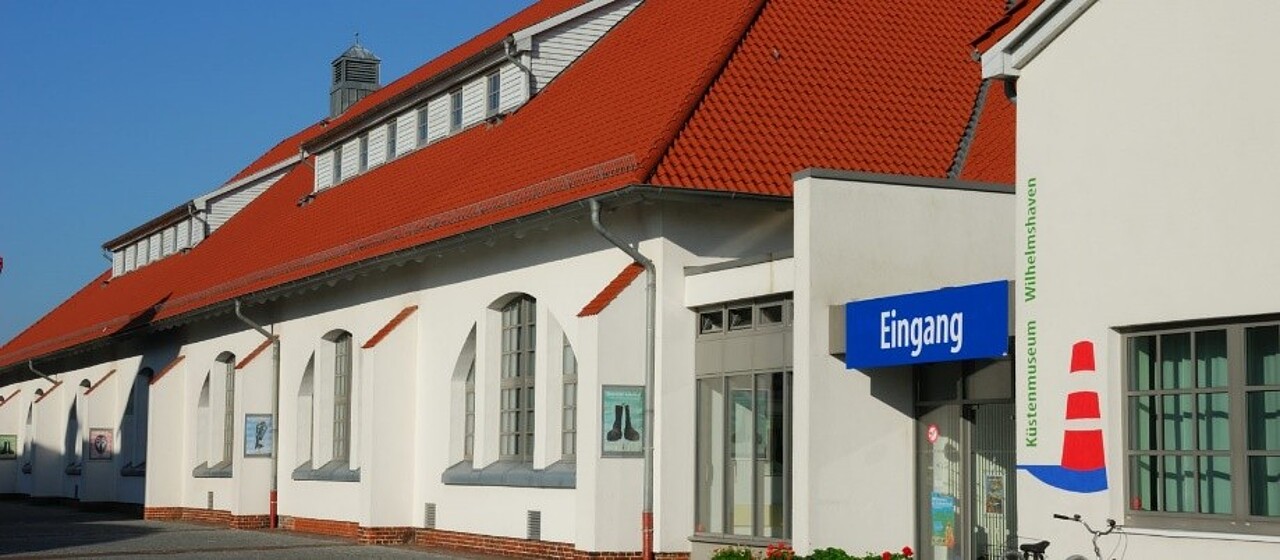
For some time now, there has been discussion within Wilhelmshaven’s community about how the permanent exhibition currently on display at the Wilhelmshaven Küstenmuseum since 2006 can or should be modified, expanded, or even completely redesigned. The focus has mostly been on the question of how much space the city’s relatively recent history should occupy, since the museum’s originally planned economic history section has never been realized.
Against this backdrop, the Wilhelmshaven Küstenmuseum and the Lower Saxony Institute for Historical Coastal Research jointly participated in 2022 in the pilot call for proposals issued by the State of Lower Saxony as part of the Pro*Niedersachsen programm "Forschung und Vermittlung für ganz Niedersachsen". The projects is focused on the development of a new content concept for the Coastal Museum based on the results of current research, under the project title “MENSCH und MEER” (People and the Sea).
The aim of the project is not to develop a concrete, detailed plan for the museum’s design, but rather to identify and describe themes and to make proposals for corresponding exhibits and presentations that would be suitable to be featured as highlights in the development of a modified or newly designed permanent exhibition.
This includes the massive changes in the coastline over the past millennia, as well as the findings from excavations at the early medieval Wurt Hessens and the late medieval Siebethsburg. The exhibition will also explore the development of Wilhelmshaven as a Prussian and later pan-German naval and commercial city, as well as the history of its major oil port and the emergence of the modern energy hub.
Special attention will also be given to the development of Wilhelmshaven as a center of science and to the research currently underway at local institutes and universities, to which a special exhibition at the Coastal Museum will be dedicated.
Further information on the scientific institutions supporting the project can be found here:



Dr. Ines Siemers-Klenner and Prof. Dr. Hauke Jöns are coordinating the project.