Excellent Weather Conditions and Plenty of Data: SUBNORDICA on an Exciting Research Expedition in the North Sea
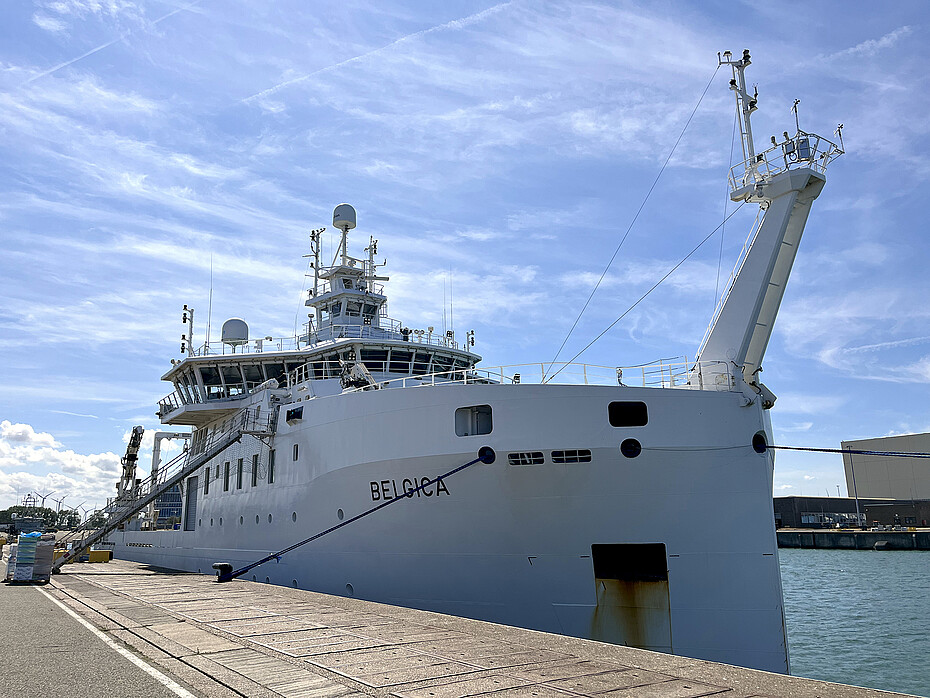
In search of traces of a Stone Age landscape which submerged in the North Sea thousands of years ago, the international research team of the SUBNORDICA project spent two weeks aboard the research vessel BELGICA (Fig. 1). The team included fifteen researchers from the Flanders Marine Institute(VLIZ) in Belgium, the Geological Survey of the Netherlands (TNO), Aarhus University in Denmark, the NIhK in Germany, and the University of Bradfordin the UK. The NIhK was represented by Daniel A. Hepp and Heiko Schmidt.
In Danish, German, and Dutch waters, the team collected geophysical and geological data around the Dogger Bank and the northern Elbe Palaeovalley. Various geophysical methods were employed, including the parametric sub-bottom profiler (TOPAS) and single-channel seismics (Sparker). Both methods use sound waves to penetrate the seabed and record the reflected echoes.
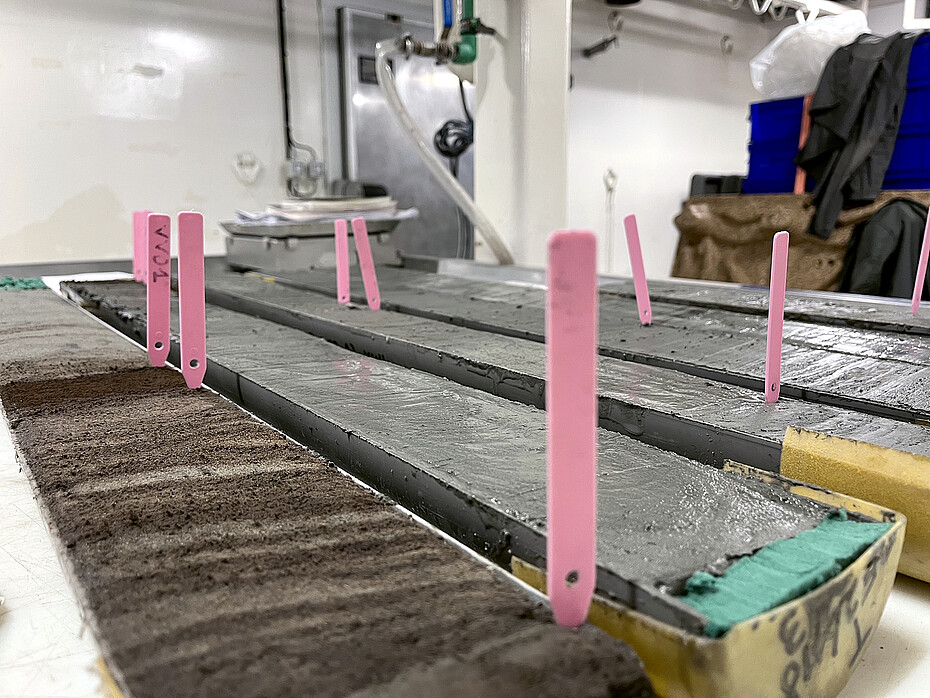
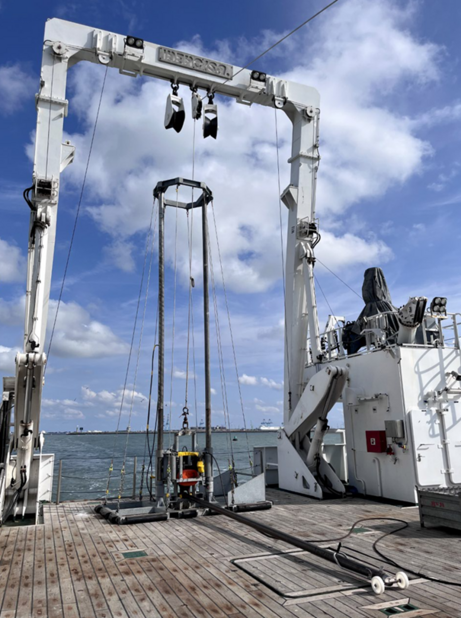
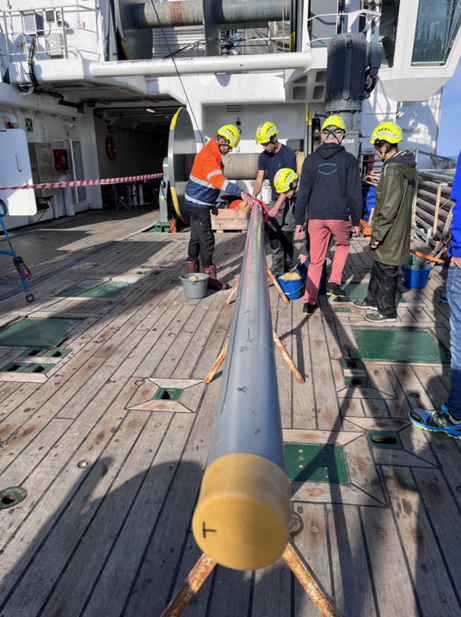
To better understand the geological structure of the subsurface captured in the acoustic images, selected structures beneath the seabed were sampled using a vibrocorer. This device is placed on the seabed, where a steel barrel is vibrated into the ground, allowing the recovery of sediment cores up to 6 meters long. There was particular excitement when opening the sediment cores revealed humic soils or peat layers, as the detailed analysis of this material enables conclusions to be drawn about the prehistoric landscapes that submerged in the North Sea 10 to 8 thousand years ago due to the post-glacial sea-level rise.
The BELGICA expedition was a complete success: in just two weeks, the team recovered sediment cores totaling 400 meters in length and geophysical measurement profiles spanning 3,500 kilometers. Over the coming months, all participating researchers will jointly analyze and interpret the data, aiming to gain new insights into the evolution of the post-glacial landscape and its impact on the Stone Age people who lived there.