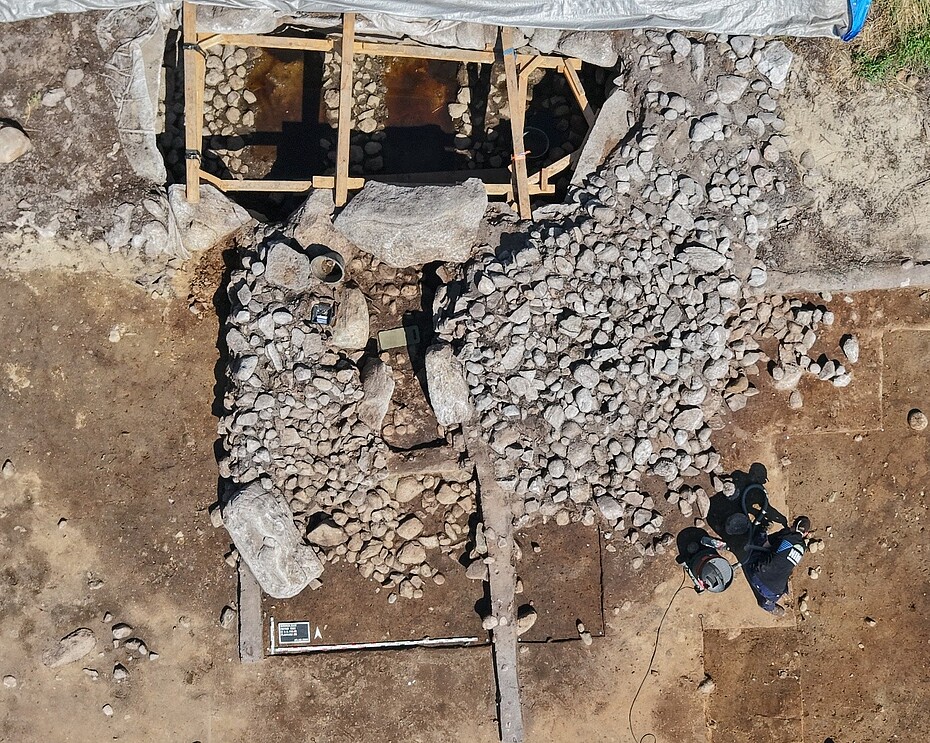
New insights gained into the construction of the Wanna megalithic tomb
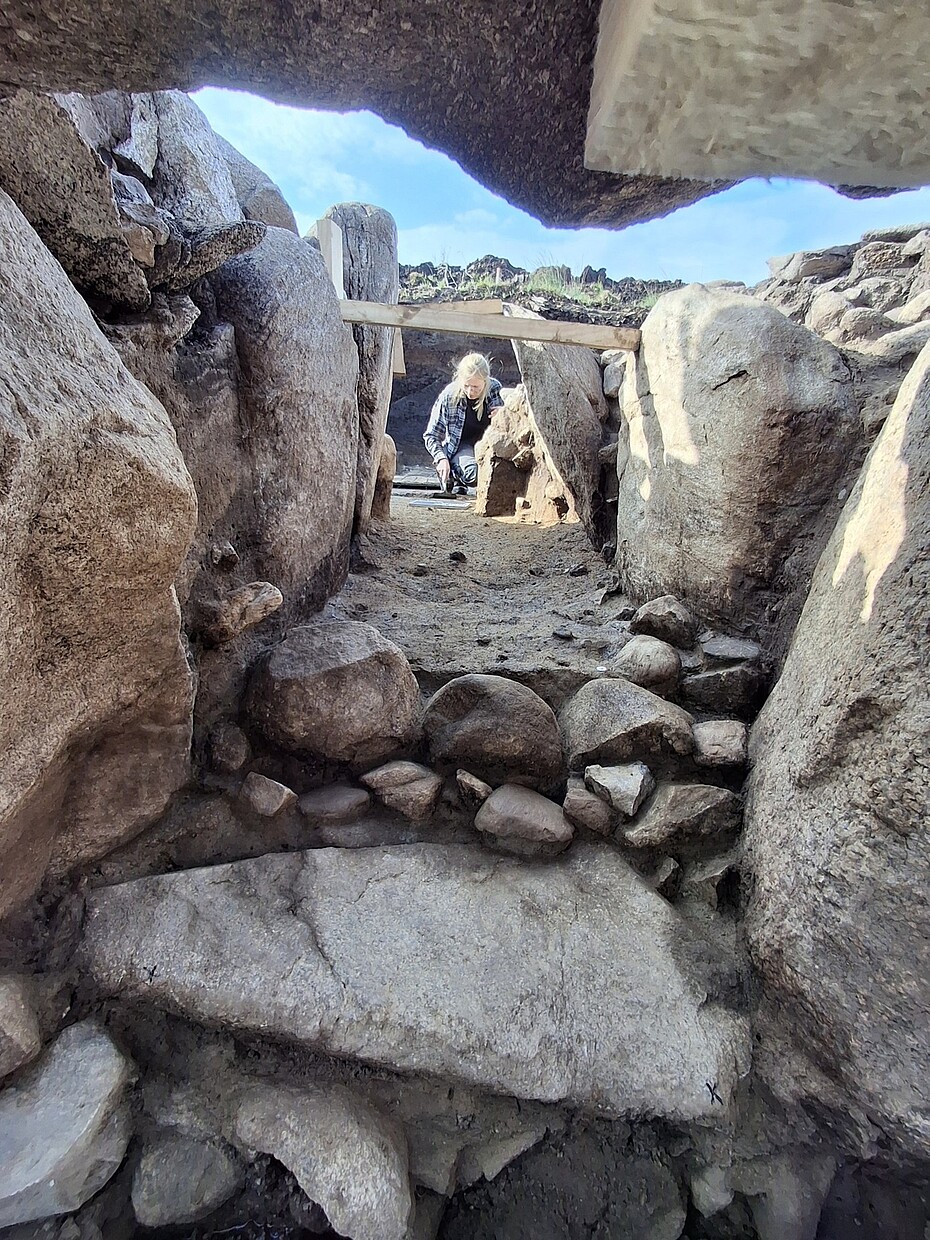
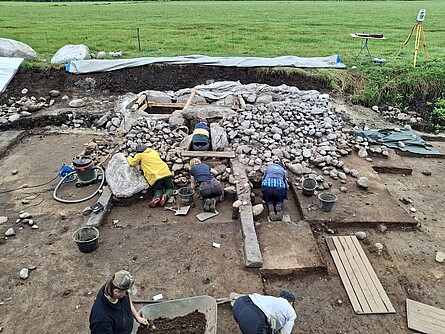
From early July to late August, the excavation of the Wanna megalithic tomb (FStNr. 1591) in the Ahlen-Falkenberger Moor, Cuxhaven district, was continued and completed. The site was constructed by the people of the Funnel Beaker Culture over 5,000 years ago and has remained exceptionally well-preserved to this day thanks to prehistoric peat accumulation. As part of the project ‘Between the Rivers and Against the Tide’, led by Dr Moritz Mennenga, it has now been possible to study the almost undisturbed architecture of the megalithic tomb.
The structure is a passage grave that was covered with four capstones. The passage, situated almost in the centre, is formed by two pairs of standing stones and covered by three large stones. The chamber is surrounded by a complex sand-and-stone packing – a protective structure that has rarely survived to the present day. Thanks to the detailed documentation of the structural elements, it is now possible to draw comparisons with the construction methods of less well-preserved megalithic tombs and to interpret them more effectively.
In addition, several vessels were discovered lying outside the burial chamber, indicating that the grave was in use over a period of several centuries. The results of the excavation can now be used as a starting point for wider regional studies, which will also include contemporary sites from regions in Denmark and the Netherlands. The aim of these investigations will be to gain new insights into the contacts between the people living in northern Central Europe at that time.
The excavations were carried out with students from the universities of Berlin, Groningen, Kiel, Leipzig and Rostock, and the University of Applied Sciences in Deventer, under the supervision of Dr Anja Behrens, and were supported by numerous volunteers. Further information on the project and the current work can be found on the project blog.